

 English
 Español

 Click to view
“The company adheres to the business philosophy of 'You Win, I Win' ”
Content
- 1 What Makes a Polyamide "Aromatic"?
- 2 Meta-Aramid and Para-Aramid at a Glance
- 3 How Aromatic Polyamide Fiber Is Made
- 4 Performance Properties That Matter
- 5 Where Aramid Fibers Are Used
- 6 How Aramid Compares with Common Spun Yarns
- 7 Processing and Care Notes
- 8 Specification Checklist
- 9 Frequently Asked Questions
- 10 A Practical Takeaway
Aromatic polyamide fiber is one of those materials that quietly holds modern performance textiles together. You may know it as aramid, the family name behind heat-resistant protective clothing, high-strength ropes, and composite reinforcement. It is not a commodity staple like cotton or polyester, and it is not a drop-in replacement for either. It is an engineered fiber with a specific job.
At our mill in Jiangsu, we spin acrylic, polyester, and blended yarns for knit and woven fabrics. We work with aramid less often than with those everyday fibers, but we frequently help customers compare performance requirements, processing behavior, and cost. This guide covers what aromatic polyamide fiber is, how it is made, where it performs, and what to check before specifying it.
What Makes a Polyamide "Aromatic"?
Polyamides are polymers joined by amide linkages. Nylon 6 and nylon 66 are aliphatic polyamides, with flexible chains that can be melted and stretched into textile filaments. Aromatic polyamides put benzene rings into the polymer backbone. That changes the chain from a flexible coil into a rigid, rod-like structure. Rigid chains pack closely, orient well, and resist heat and deformation. This is why aramid fibers can be both strong and heat resistant.
The position of the amide linkage matters. Para-linked aramid has a straight backbone and gives very high tensile strength and modulus. Meta-linked aramid has a kinked chain, which lowers strength somewhat but improves heat and flame resistance and gives a softer hand. Both are aromatic polyamides, but they are not interchangeable.
Meta-Aramid and Para-Aramid at a Glance
Most sourcing decisions come down to which family fits the job. The table below is a practical starting point, not a specification sheet.
| Property | Meta-Aramid | Para-Aramid |
|---|---|---|
| Chain structure | Kinked, less rigid | Straight, highly rigid |
| Main strength | Heat and flame resistance | High strength and modulus |
| Typical form | Staple, filament, paper, felt | Filament, staple, pulp |
| Common uses | Protective barriers, electrical insulation | Ropes, composites, ballistics, cut protection |
Meta-aramid is usually the choice for heat and flame barriers, electrical insulation, and filtration. Para-aramid is chosen for strength, cut resistance, ballistic protection, and composite reinforcement. Some products combine both to balance protection and comfort.
How Aromatic Polyamide Fiber Is Made
Aramid is not melt-spun. The polymer degrades before it reaches a useful melt flow, so producers use solution spinning. The exact route depends on the polymer type, but the sequence is broadly similar:
- Polymerization: diamine and diacid chloride react in a solvent to form the aromatic polyamide. Molecular weight must be controlled.
- Dope preparation: the polymer solution is filtered, deaerated, and adjusted to the spinning concentration.
- Spinning: meta-aramid is commonly dry-spun into hot air; para-aramid is often wet-spun into a coagulating bath.
- Drawing: the filament is stretched to align polymer chains and develop strength and modulus.
- Finishing: washing, neutralization, and spin finish remove solvent and improve handling.
- Conversion: continuous filament can be used as tow, or cut into staple for spun yarns.
Performance Properties That Matter
Aramid's reputation rests on a combination of properties that are difficult to match in one fiber:
- Heat resistance: meta-aramid can be used continuously in hot environments, with short-term exposure well above common textile limits.
- Flame resistance: aramid chars rather than melting and dripping, which is valuable in protective barriers.
- High strength and modulus: para-aramid offers very high tenacity per unit weight.
- Dimensional stability: low creep and low shrinkage under heat help in belts, ropes, and composites.
- Chemical resistance: aramid resists many oils, solvents, and fuels, though strong acids and bases can attack it.
- Electrical insulation: meta-aramid papers and fabrics are used in motors, transformers, and cable wraps.
There are limitations. Aramid can degrade under prolonged UV exposure, and para-aramid is sensitive to flex fatigue and abrasion in some rope designs. It is difficult to dye because the fiber is highly crystalline and chemically resistant. Many colored aramid products are solution-dyed, with pigment added to the polymer dope. Cost is also higher than commodity spun yarns, so aramid is usually specified where failure has real consequences.
Where Aramid Fibers Are Used
Protective apparel is the best-known outlet: heat-resistant workwear, firefighter turnout gear, racing suits, and industrial gloves. Aramid also appears in filtration bags for hot gas, brake linings, gaskets, electrical insulation, and composite parts for transport and sports equipment. In ropes and cables, para-aramid provides strength without the weight of steel.
Aramid is less common in next-to-skin apparel. Its stiffness, low moisture regain, and limited dyeability make it a poor match for soft fashion knits. When it appears in everyday fabrics, it is usually a small blend component used for cut resistance or heat stability.
Not every outdoor program needs aramid-level performance. For UV-stable acrylic outdoor yarns used in shade fabrics, outdoor covers, and marine textiles, we supply a practical alternative in our own range.
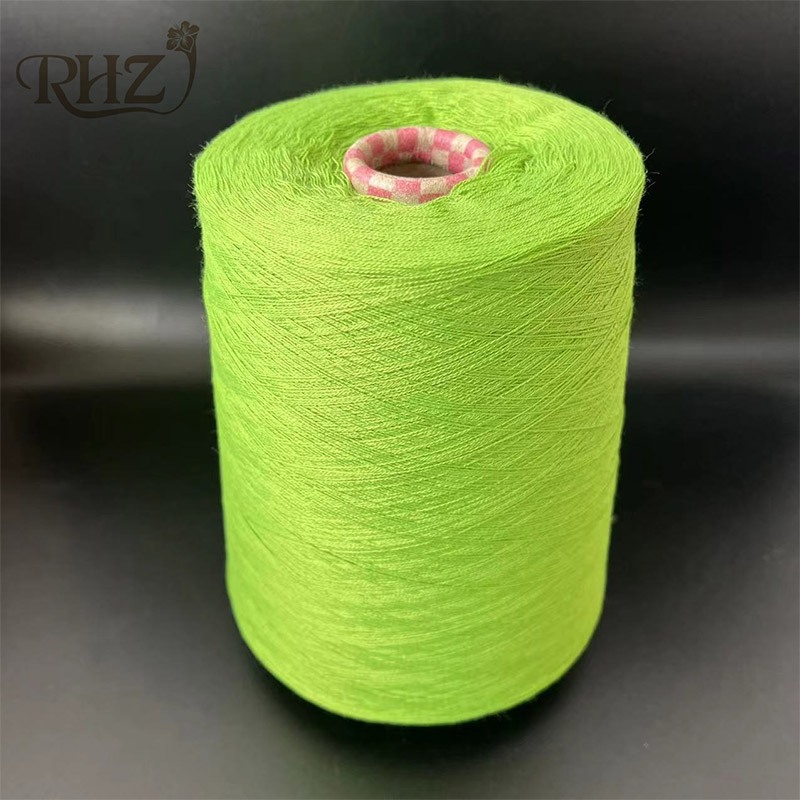 Acrylic Outdoor Yarn for UV-Stable TextilesA 100% acrylic 34NM/2 yarn for outdoor cushions, rugs, covers, and shade fabrics, offering UV resistance, weather durability, colorfastness, and a soft hand.View Product →
How Aramid Compares with Common Spun Yarns
Commodity yarns solve different problems. Acrylic is soft, warm, and UV-resistant, which is why it works well in outdoor furnishings and knitwear. Polyester is strong, abrasion-resistant, and cost-effective, but it melts and can drip when exposed to flame. Nylon is tough and elastic, yet it also melts. Cotton is comfortable and breathable but burns and has limited heat resistance.
Aramid sits outside that group. It is not chosen for softness or low cost; it is chosen for heat, flame, and strength. In workwear and industrial fabrics, aramid may be used only in the face or barrier layer while the base fabric relies on more economical spun yarns. Our polyester-viscose weaving yarn is one such workhorse for industrial and workwear fabrics where durability and cost need to be balanced.
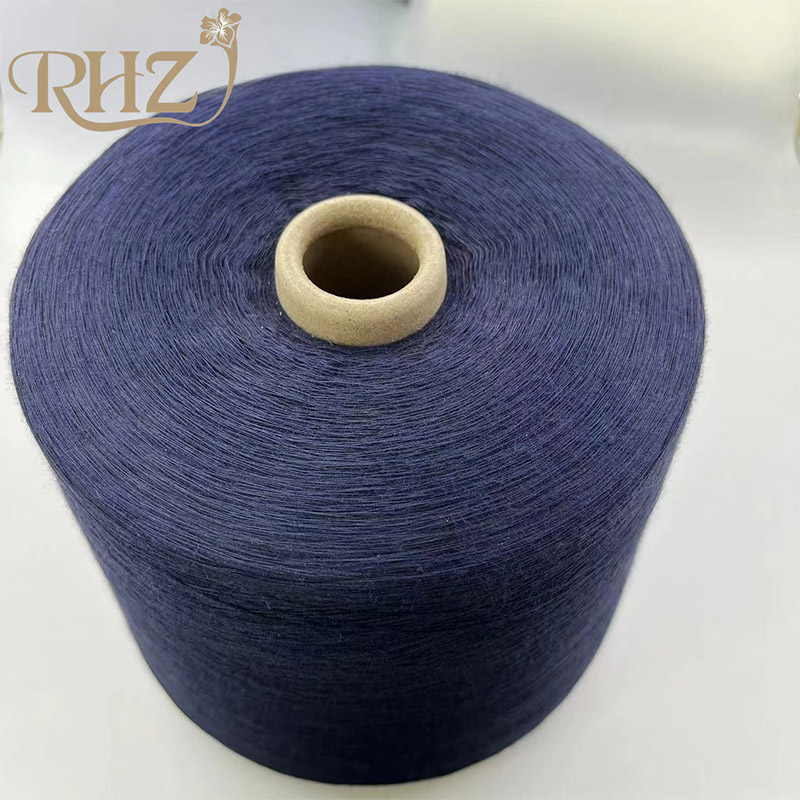 Polyester Viscose Workwear Weaving YarnA 65/35 polyester-viscose 40s/1 blend for workwear and industrial fabrics, balancing strength and wrinkle resistance with softness, breathability, and drape.View Product →
This layered approach is often more practical than building an entire fabric from aramid. It also lets designers use familiar spinning, weaving, and finishing routes for the majority of the cloth.
Processing and Care Notes
Aramid staple behaves differently from acrylic or polyester on spinning equipment. Its high modulus can increase carding and drafting loads, and its low elongation can make it less forgiving at the yarn break. Blending with a compatible fiber can improve processability, but the blend ratio should be tested on the actual machinery.
Dyeing is another constraint. Conventional disperse and reactive dye routes do not work well on aramid. Solution dyeing is the usual route for colored fiber, and piece dyeing is limited. For protective clothing, color is often specified for identification rather than fashion.
Care instructions should come from the fiber or garment supplier. In general, avoid chlorine bleach, high-temperature ironing, and prolonged UV exposure. Wash separately from lint-shedding fabrics, and follow the recommended drying temperature. For industrial parts, the relevant standard matters more than a generic care label.
Specification Checklist
If you are sourcing aramid for a textile program, define the following before requesting samples:
- Fiber family: meta-aramid, para-aramid, or a blend.
- Form: staple, tow, filament, or spun yarn.
- Linear density and staple length, matched to your spinning system.
- Tenacity, elongation, and modulus targets for the finished yarn.
- Heat and flame performance, including the test method and limit.
- Color route: natural, solution-dyed, or blended with a colored carrier fiber.
- Finish and packaging, especially for automated spinning lines.
Frequently Asked Questions
Is aromatic polyamide the same as nylon?
No. Nylon is an aliphatic polyamide. Aromatic polyamide has benzene rings in the backbone, which makes it stiffer and more heat resistant. Both are polyamides, but their performance and processing are different.
Is aramid biodegradable?
Aramid is not readily biodegradable. Its chemical stability is part of its value in durable applications, but it also means end-of-life routes need attention. Recycling is possible in some industrial streams, but it is not a commodity loop like PET.
Can aramid be blended with other fibers?
Yes. Aramid is blended with modacrylic, cotton, wool, and other fibers to balance cost, comfort, and protection. Blends can improve processability and hand, but they also change flame and heat performance, so testing is essential.
A Practical Takeaway
Aromatic polyamide fiber earns its place where heat, flame, and strength are non-negotiable. It is not a general-purpose replacement for acrylic or polyester, and it should not be specified without a clear performance target. The most successful programs use aramid selectively, then build the rest of the fabric from spun yarns that are easier to process, dye, and cost.
If you are developing an outdoor, workwear, or industrial fabric and need help comparing aramid with conventional spun yarns, contact our team. We can review your yarn count, blend, and end use, and recommend a practical route from our acrylic, polyester, core-spun, and weaving yarn ranges.
