

 English
 Español
.jpg?imageView2/2/w/800/h/800/format/webp/q/75 "Viscose Core Spun Yarn")

 Click to view
“The company adheres to the business philosophy of 'You Win, I Win' ”
Content
A fabric mill in Guangdong recently called us with a quick question: should it use FDY or DTY for a lightweight lining fabric? Our answer was not a simple recommendation, because neither yarn is inherently better. The right choice depends on the end use, the hand feel, and how the yarn performs on the customer’s looms and knitting machines. Here is a practical breakdown of polyester filament yarn from a manufacturing perspective.
What is polyester filament yarn?
Polyester filament yarn is a continuous strand of polyester made by melting PET polymer and extruding it through spinnerets. The molten polymer solidifies into filaments, which are then drawn and wound onto packages. Because the yarn is continuous, it has no protruding fiber ends. That structure gives it better uniformity, higher strength, and less pilling than most spun yarns.
This is where many buyers get confused. Polyester filament yarn is not the same as polyester spun yarn. Spun yarn starts from polyester staple fiber, twists short fibers together, and has a hairy surface. Filament yarn, by contrast, is smoother, stronger, and more consistent in diameter. The decision between spun and textured filament comes later in the product development process, but the difference starts here.
Main types of polyester filament yarn
Most commercial polyester filament yarn falls into four categories: POY, FDY, DTY, and HTY. Each one sits at a different stage of processing and behaves differently in the finished fabric.
| Form | Full name | Key characteristics | Typical uses |
|---|---|---|---|
| POY | Partially oriented yarn | Intermediate product, not fully drawn, low cost, needs further processing | Texturizing into DTY, draw-warping for warp knitting |
| FDY | Fully drawn yarn | Smooth, uniform, fully oriented, high strength, low elongation | Linings, taffeta, warp knitting, high-density woven fabrics |
| DTY | Draw texturized yarn | Crimped, bulky, soft, with stretch and a warmer hand | Knitwear, sportswear, casual fabrics, seamless garments |
| HTY | High tenacity yarn | Very high strength, low elongation, abrasion resistant | Webbing, rope, conveyor belts, industrial textiles |
POY is an intermediate product, so it is rarely used directly in apparel. It is drawn into FDY or texturized into DTY. FDY is smooth and uniform, making it a favorite for woven linings and high-density fabrics. DTY has a crimped, bulky structure, which gives knitwear a softer feel. HTY is an industrial specialist with very high tenacity and low elongation.
Polyester staple fiber is a separate branch because it is not a filament at all. PSF is cut into short lengths and then spun into yarn, which is the raw material for many spun polyester products.
How to read a filament yarn specification
If you are ordering filament yarn, do not stop at the denier. A specification like 75D/36F tells you the total weight per 9,000 meters and the number of filaments. A 75D/36F FDY feels firmer; a 75D/144F version has a much softer, silkier hand because the same weight is distributed across more filaments. This filament count difference changes drape, coverage, and cost, so it must match the fabric design.
Also check tenacity, elongation, shrinkage, twist, and luster. These values determine how the yarn performs in high-speed warping, weaving, and dyeing.
Properties that make polyester filament yarn valuable
Filament yarn is popular because it solves specific production problems. The properties that matter most in fabric development include:
- Strength and durability: continuous filaments distribute stress more evenly than short fibers.
- Uniformity: filament yarn has fewer thick and thin spots, which improves fabric appearance and processing stability.
- Dimensional stability: FDY in particular holds its shape well during weaving, dyeing, and finishing.
- Easy-care performance: polyester filament dries quickly and resists shrinking and wrinkling.
The single most useful property of filament yarn is its evenness. For high-speed textile production, a uniform yarn means fewer stops, fewer faults, and a more predictable finished fabric.
Applications across textile segments
Polyester filament yarn is everywhere in textiles. In apparel, FDY goes into linings, taffeta, and sportswear; DTY shows up in knitwear and seamless garments. In home textiles, filament yarn gives curtains and bedding a smooth surface and good dimensional stability. For outdoor items, FDY and HTY provide the strength needed for shell fabrics, webbing, and coated panels. Industrial users depend on HTY for ropes, conveyor belts, and tarpaulins.
From our own production experience, the yarn choice changes with the fabric construction. A clean FDY surface works best for coated outdoor fabric panels. A bulkier DTY gives casual knitwear a softer, warmer hand. After more than 20 years in yarn manufacturing, we still recommend starting with the end product, not the yarn name.
Quality and sourcing considerations
Specify the yarn for the actual end use
When a fabric fails, the cause is often a mismatch between the yarn and the application. A lining needs FDY with controlled shrinkage. A stretchy knit fabric often needs DTY with specific crimp characteristics. An outdoor application needs high tenacity or a yarn with good UV stability. Write down the full specification before you compare prices.
Ask about color consistency and dyeing route
Polyester filament accepts dye well, but consistency depends on how the yarn is colored. Dope-dyed filament yarn is colored before extrusion, so it offers strong colorfastness and better lot-to-lot consistency. Package-dyed filament yarn is more flexible but needs careful lot control. In dark brushed polyester fabrics, color differences are a common problem. We suggest asking your supplier about dye lot size and color matching procedures before production begins.
When a different yarn structure makes more sense
Continuous filament is not always the right answer. If your product needs warmth, a brushed surface, or a less slippery texture, spun or core-spun yarns can do things that a flat filament cannot. That is especially true for knitwear, blankets, and home textiles.
For a lofted, wool-like effect, our high-bulky polyester yarn is a practical choice. When you need a dependable spun polyester with even coverage, solid polyester yarn is one of the most stable options. And if you want filament strength without losing a natural spun touch, polyester core-spun yarn combines a continuous filament core with a staple fiber sheath.
.jpg?imageView2/2/w/800/h/800/format/webp/q/75) Custom Polyester Core Spun Yarn Suppliers,FactorySuzhou RHZ Textile Technology Co., Ltd. is China Custom Polyester Core Spun Yarn Suppliers,Factory,Polyester Core Spun Yarn is made by P...View Product →
Custom Polyester Core Spun Yarn Suppliers,FactorySuzhou RHZ Textile Technology Co., Ltd. is China Custom Polyester Core Spun Yarn Suppliers,Factory,Polyester Core Spun Yarn is made by P...View Product →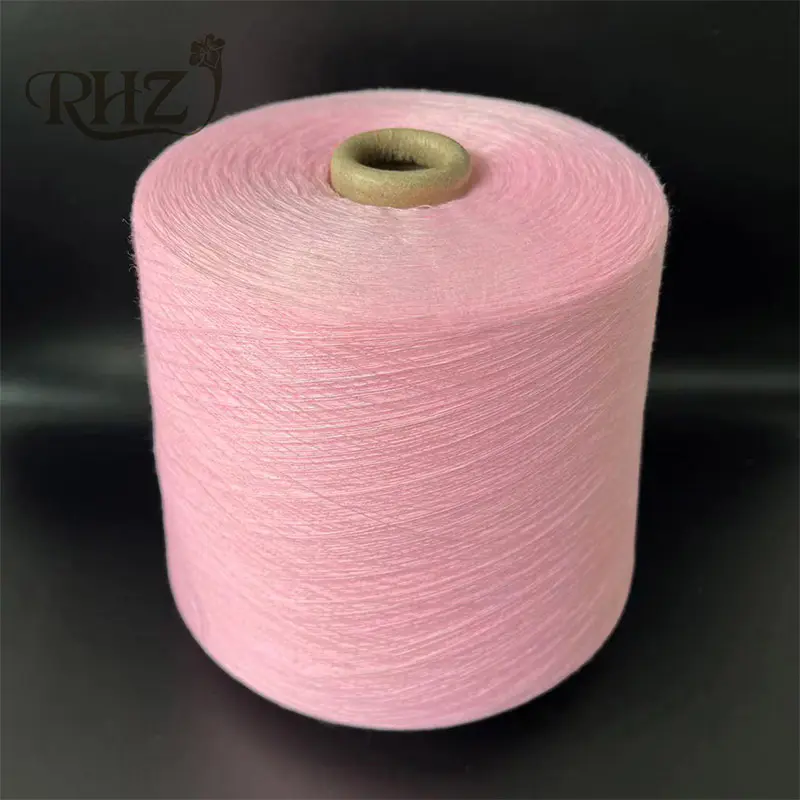 Custom Solid Polyester Yarn Suppliers,FactorySuzhou RHZ Textile Technology Co., Ltd. is China Custom Solid Polyester Yarn Suppliers,Factory,Polyester Spun Yarn refers to yarn spun f...View Product →
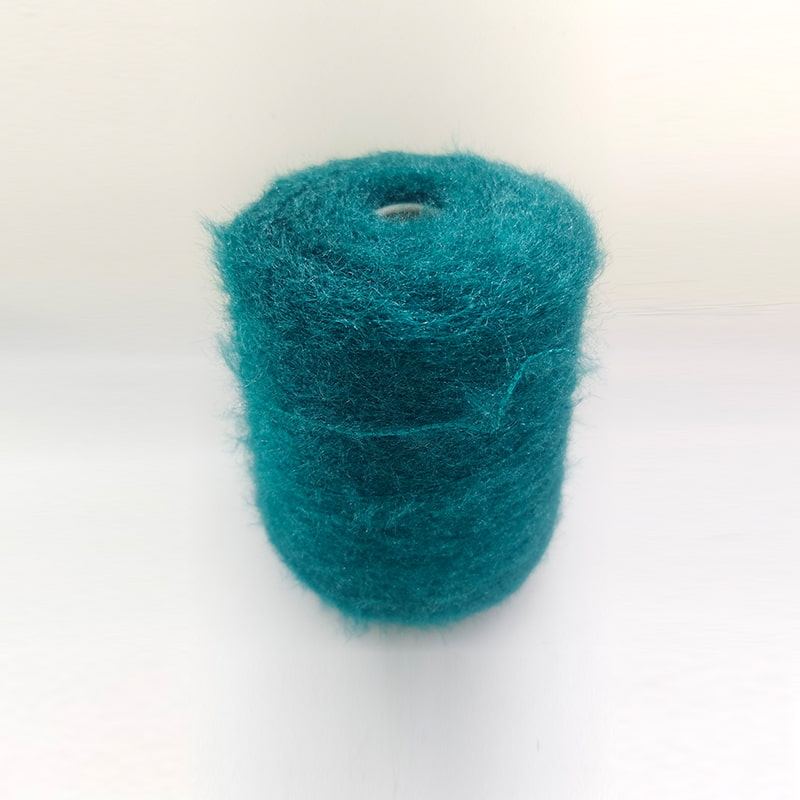
.jpg?imageView2/2/w/800/h/800/format/webp/q/75) Custom High Bulky Polyester Yarn Suppliers,FactorySuzhou RHZ Textile Technology Co., Ltd. is China Custom High Bulky Polyester Yarn Suppliers,Factory,High Bulky Polyester Yarn is stretch...View Product →
Custom High Bulky Polyester Yarn Suppliers,FactorySuzhou RHZ Textile Technology Co., Ltd. is China Custom High Bulky Polyester Yarn Suppliers,Factory,High Bulky Polyester Yarn is stretch...View Product →
If you are still comparing the two structures, you can read this guide to the difference between polyester spun yarn and polyester textured yarn to see where each one works best.
How to choose with an experienced supplier
Buying polyester filament yarn should not be a guessing game. Provide your supplier with the fabric structure, machine type, hand feel target, colorfastness requirements, and acceptable price range. A manufacturer that understands yarn processing can point you to the right form before sampling starts.
At Suzhou RHZ Textile, we have production experience across spun, core-spun, and specialty yarns. Our production equipment supports a wide range of yarn counts and colors, and our technical team can help you review a specification before bulk production. For an overview of our manufacturing capacity, see our about page. If you have a specific fabric project, contact our technical team and we will work through the yarn selection together.
