

 English
 Español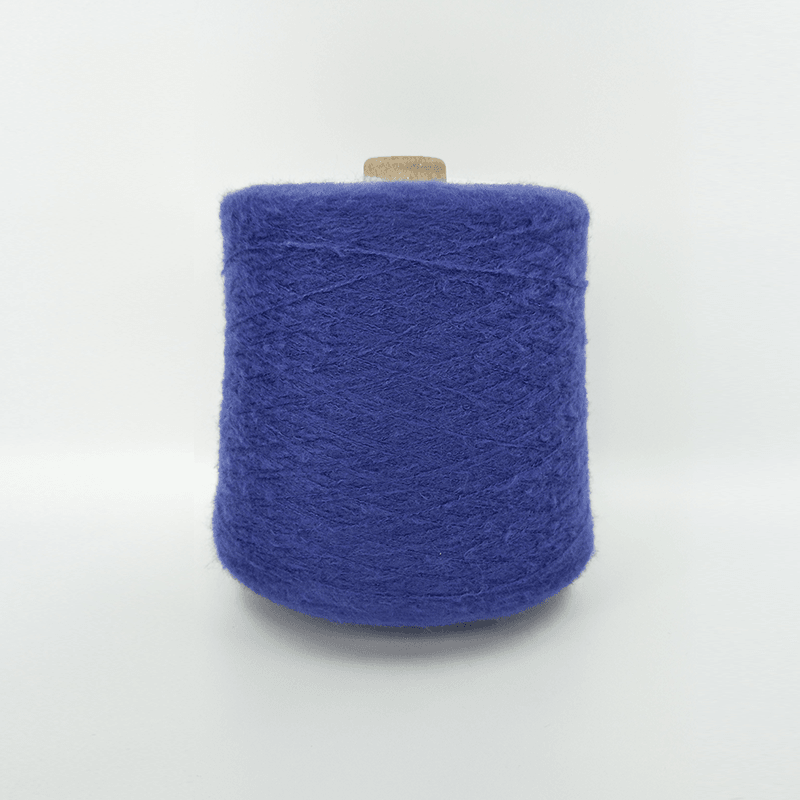
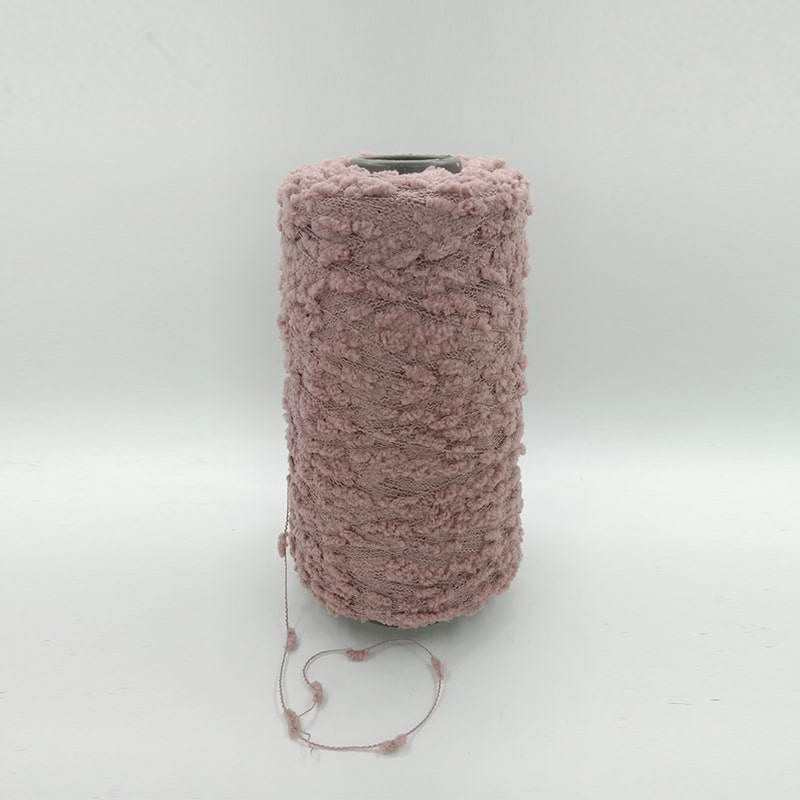
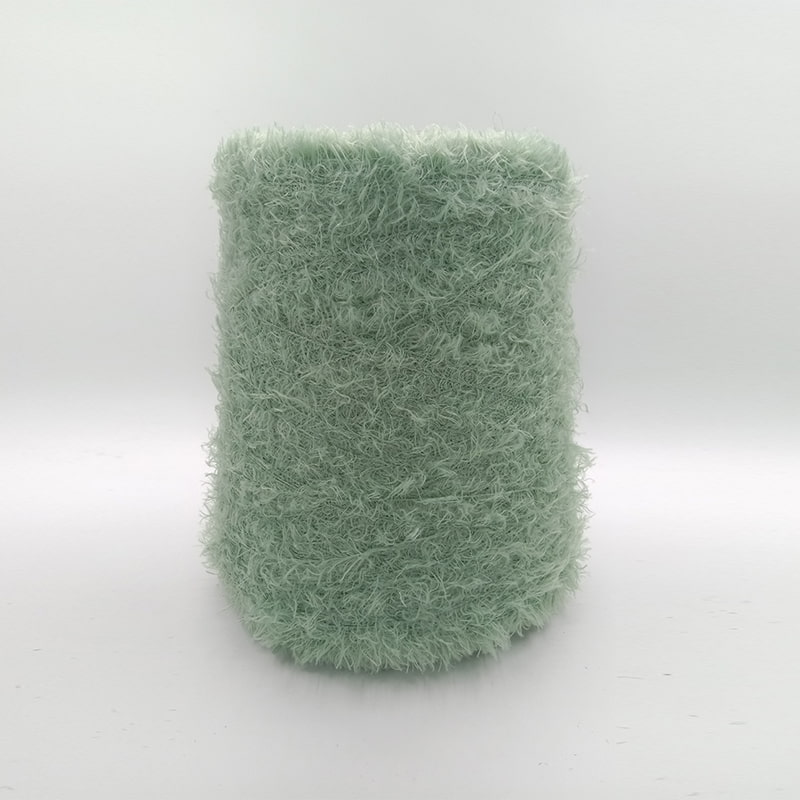
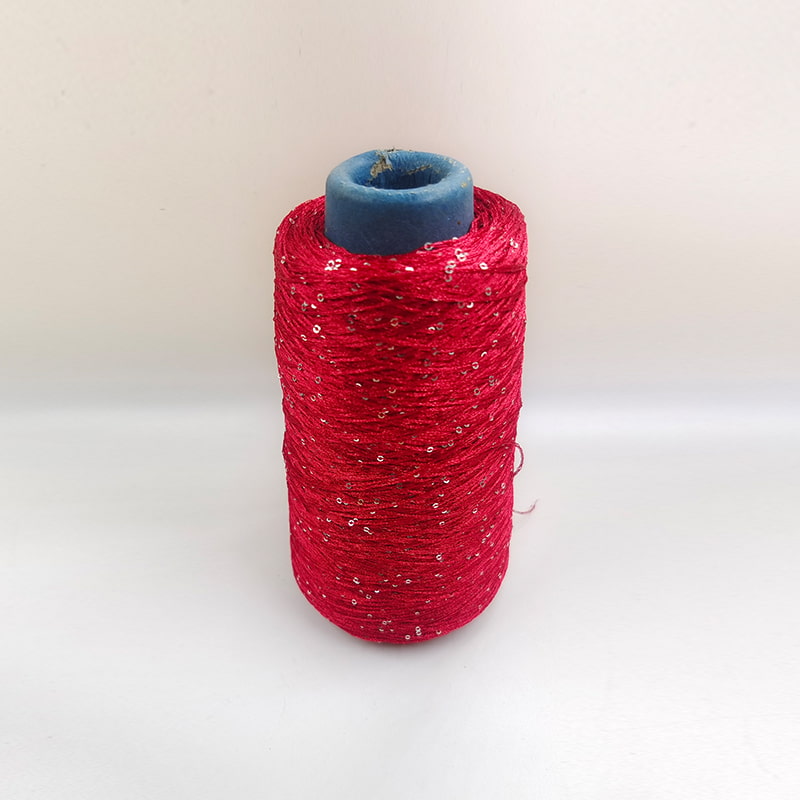
.jpg?imageView2/2/w/800/h/800/format/webp/q/75 "Viscose Core Spun Yarn")

 Click to view
“The company adheres to the business philosophy of 'You Win, I Win' ”
Content
Ask anyone who works with yarn every day, and they will tell you that acrylic material rarely gets the credit it deserves. It appears in winter sweaters, soft blankets, outdoor covers and children's clothing, yet most people only notice it when something feels warm, soft and surprisingly affordable. If you are a designer, a product developer or simply a curious shopper, understanding what acrylic material really is will help you choose it with confidence instead of guesswork.
What Is Acrylic Material?
Acrylic material is a synthetic fiber made from a polymer called polyacrylonitrile. For a fiber to be labelled acrylic in textile products, it must contain at least 85 percent acrylonitrile. Fibers that fall between roughly 35 and 85 percent are classified as modacrylics. The fiber is lightweight, warm and soft, and it takes dye exceptionally well.
The name does cause some confusion. Acrylic fiber is not the same material as the clear acrylic sheet used for signage, display stands or aquariums, even though both begin with acrylonitrile chemistry. The two are produced through different processes and end up in completely different applications. In this article, we are talking about the textile version.
Acrylic was first commercialized in the 1940s as an affordable answer to wool. It offered warmth without the cost, weight and care demands of animal fiber, and it could be produced in consistent, repeatable quality. That promise still holds today. If you would like to go deeper into the fiber itself, our note on the characteristics of acrylic fiber covers its structure and behavior in more detail.
How Acrylic Material Is Made
Production starts with acrylonitrile monomers, which are polymerized in a reactor together with small amounts of comonomers that improve dyeability and softness. The resulting polymer is dissolved and forced through fine spinnerets, either into a wet bath or into a heated dry chamber, to form continuous filaments.
Those filaments are then drawn to align their molecular chains, washed, crimped and cut into staple fiber of a defined length. Crimp matters more than most people expect. It is what gives acrylic its loft, and loft is what traps air and creates warmth. High-bulk acrylic takes this a step further: the fiber is stretched during production to store latent crimp, then relaxed later with heat, usually after the yarn or garment has been formed, so the material opens up into a fuller, softer structure.
Staple fiber then travels to a spinning mill, where it is drafted and twisted into yarn. Modern mills use different spinning systems depending on the target hand feel and cost. Our own facility in Jiangsu runs imported auto-winding lines and high-speed vortex spinning equipment capable of 550 meters per minute, more than sixty kilograms per hour, across a count range of 10S to 60S. Because we dye the fiber before spinning rather than dyeing the finished yarn, the color sits inside the material instead of on top of it, which gives better shade consistency and better color fastness.
Key Properties of Acrylic Material
Acrylic behaves like a fiber that was designed to imitate wool while being easier to live with. The table below summarizes the properties that matter most when you are specifying it.
| Property | What acrylic does | What it means in practice |
|---|---|---|
| Warmth | High loft traps air, close to wool | Sweaters, blankets, fleece |
| Moisture regain | Roughly two percent, very low | Dries quickly, feels dry to the touch |
| Weather resistance | Excellent resistance to UV and rot | Awnings, outdoor covers, marine textiles |
| Color fastness | Dyes deeply and holds shade well | Strong, long lasting colors |
| Pilling | Moderate to high in soft, low twist yarns | Needs careful yarn design and finishing |
| Static | Prone to cling in dry air | Managed with softeners and humidity |
| Heat sensitivity | Softens at high temperatures | Wash and dry at low to moderate heat |
| Chemical resistance | Unaffected by most acids and solvents | Long storage life, easy cleaning |
Advantages of Acrylic Material
- Warm and soft with a genuine wool-like hand
- Lightweight for the amount of insulation it provides
- Resists moths, mildew and most common chemicals
- Holds shape and resists wrinkles through repeated washing
- Costs considerably less than wool while behaving predictably
Limitations to Keep in Mind
- Low moisture absorption means it can feel less breathable in heat
- Soft constructions are more likely to pill or fuzz over time
- Static cling builds up in dry, cold conditions
- High iron temperatures can flatten or glaze the fiber permanently
The Forms Acrylic Material Takes in Textiles
Once acrylic fiber leaves the spinning line, it can be turned into a wide range of yarns. Each one is aimed at a different look, hand feel and end use.
High-Bulk Acrylic
High-bulk acrylic is stretched and relaxed to develop maximum loft, which makes it the warmest and softest option in the family. It is the fiber behind classic winter knitwear, chenille-style sweaters and soft blankets, and it is usually spun with a moderate twist so the yarn stays bulky after knitting.
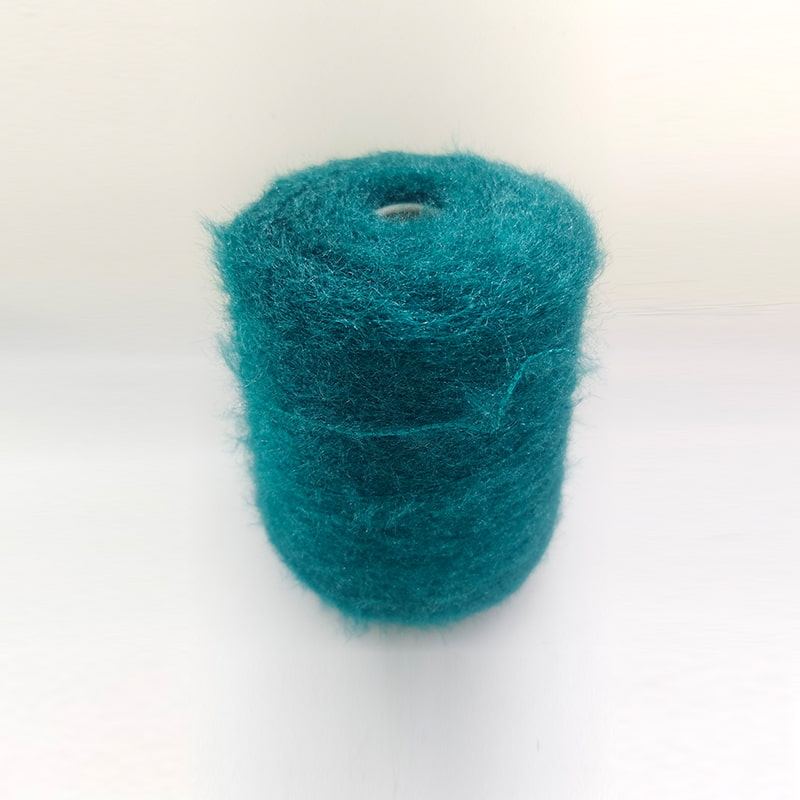
-2.jpg?imageView2/2/w/800/h/800/format/webp/q/75) High-Bulk Acrylic Knitting Yarn for Warm Winter Projects100% acrylic bulky yarn in 19S/2 and 28S/2 counts, suited to knitting warm scarves, hats, blankets, and chunky sweaters.View Product →
High-Bulk Acrylic Knitting Yarn for Warm Winter Projects100% acrylic bulky yarn in 19S/2 and 28S/2 counts, suited to knitting warm scarves, hats, blankets, and chunky sweaters.View Product →
Solid and Solution-Dyed Acrylic
Solid acrylic is dyed to a single consistent shade and spun into a clean, even yarn. Because the color is fixed before spinning, the yarn resists fading and batches match closely, which matters when a garment program runs across several production cycles.
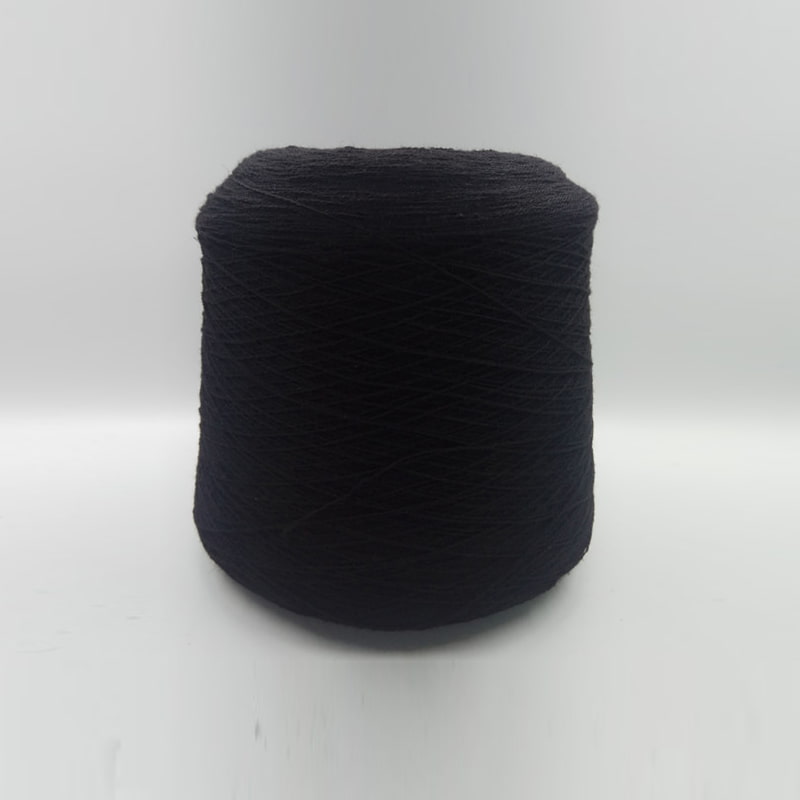
.jpg?imageView2/2/w/800/h/800/format/webp/q/75) Solid Acrylic Knitting Yarn for Sweaters, Blankets, and Accessories100% acrylic solid-color yarn in 34NM/2 and 50NM/2 counts, suited to knitting sweaters, scarves, accessories, and blending with other fibers.View Product →
Solid Acrylic Knitting Yarn for Sweaters, Blankets, and Accessories100% acrylic solid-color yarn in 34NM/2 and 50NM/2 counts, suited to knitting sweaters, scarves, accessories, and blending with other fibers.View Product →
Blended and Core-Spun Acrylic
Acrylic is rarely used alone when a mill wants to fine-tune cost and performance. Blending it with wool improves warmth and drape, blending with viscose softens the hand, and blending with polyester adds strength. Core-spun versions wrap acrylic around an elastic core so the finished fabric recovers its shape instead of stretching out, and anti-pilling variants are available for garments that face heavy abrasion.
Brushed, Hairy and Fancy Acrylic
Brushing raises fine fibers to the surface for a soft, fuzzy handle, while fancy constructions such as feather yarn, chenille and imitation mink build texture and volume into the yarn itself. These are the acrylics behind scarves, brushed coats, faux fur and novelty trims.
Acrylic Compared With Wool, Cotton and Polyester
Choosing a fiber is almost always a trade-off. This comparison keeps the differences in plain terms.
| Fiber | Warmth and feel | Drying speed | UV resistance | Care demands |
|---|---|---|---|---|
| Acrylic | Warm, wool-like, lofty | Fast | Excellent | Low, cool wash and low heat |
| Wool | Warm, natural, resilient | Slow | Moderate | High, hand wash or dry clean |
| Cotton | Cool, breathable, crisp | Slow | Moderate | Moderate, can shrink |
| Polyester | Smooth, strong, slightly slick | Fast | Good | Low, easy care |
Where Acrylic Material Is Used
Acrylic covers more ground than most people realize, from everyday clothing to fabric that spends its life outdoors.
- Knitwear: sweaters, cardigans, hats, gloves, socks and children's wear
- Home textiles: blankets, throws, cushions, upholstery, carpets and bath mats
- Outdoor products: awnings, boat covers, furniture covers and outdoor cushions
- Texture and fashion: faux fur, brushed coats, scarves and novelty trims
Outdoor use is where acrylic earns particular respect. Unlike many fibers that weaken under prolonged sunlight, acrylic holds its strength and color, so it suits fabric that cannot be replaced every season. Our own mill added a fully Italian production line dedicated to outdoor fabric panels precisely because demand for weather-resistant material keeps growing. You can read more about how we work and what we build on our about page.
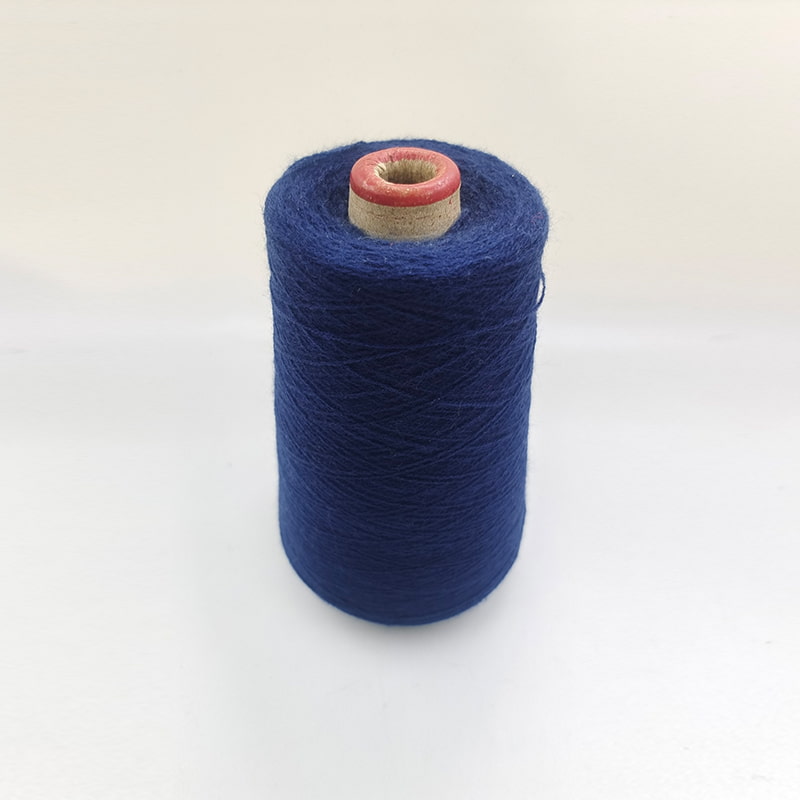
.jpg?imageView2/2/w/800/h/800/format/webp/q/75) Acrylic Outdoor Yarn for Curtains, Carpets, and Patio Textiles100% acrylic 34NM/2 weaving yarn for curtains, carpets, and outdoor products, with weather resistance, colorfastness, and easy maintenance.View Product →
Acrylic Outdoor Yarn for Curtains, Carpets, and Patio Textiles100% acrylic 34NM/2 weaving yarn for curtains, carpets, and outdoor products, with weather resistance, colorfastness, and easy maintenance.View Product →Caring for Acrylic Material
Acrylic is genuinely easy to look after, as long as you respect its sensitivity to heat. A simple routine keeps garments and home textiles looking new for years.
- Turn garments inside out before washing to reduce surface abrasion.
- Use a gentle cycle with cool or lukewarm water and a mild detergent.
- Avoid bleach and hot water, which dull the color and flatten the loft.
- Tumble dry on the lowest setting, or lay flat to dry for the best shape retention.
- Iron only on a low synthetic setting, and press on the reverse side with a cloth.
- Store folded rather than on hangers, since acrylic stretches under its own weight.
Pilling and static are the two complaints people raise most often, and both are manageable. Pills usually form where friction is highest, such as under the arms or along bag straps, and they can be removed with a fabric shaver. Static is a dry-air problem rather than a fiber defect, so a little fabric softener or a slightly humid room makes a noticeable difference.
Common Questions About Acrylic Material
Is acrylic material breathable?
Less breathable than cotton, wool or viscose because it absorbs very little moisture. For cold-weather knitwear that is rarely a problem, but for summer clothing or sportswear it is better used in a blend rather than on its own.
Does acrylic material pill?
It can, especially in soft low-twist yarns and in areas that rub. Tighter twist, better fiber blend selection and an anti-pilling finish all reduce the tendency considerably.
Is acrylic material warm enough for winter?
Yes. High-bulk acrylic traps a large amount of air for its weight, which is why it feels close to wool in a sweater or blanket while staying lighter on the body.
Is acrylic material safe to wear?
Textile acrylic is widely used in clothing and home products and is considered low risk for most wearers. People with very sensitive skin may prefer a blend with cotton or viscose, since acrylic does not absorb moisture from the skin.
Acrylic material is not a compromise fiber. It is a practical one, chosen for warmth, color, weather resistance and cost that stays predictable from order to order. Used well, in the right blend and the right yarn construction, it delivers results that are hard to match with anything else. Whether you are developing a winter knit program or an outdoor fabric line, the fiber rarely lets you down as long as you plan around its limits.
