

 English
 Español
.jpg?imageView2/2/w/800/h/800/format/webp/q/75 "Viscose Core Spun Yarn")

 Click to view
“The company adheres to the business philosophy of 'You Win, I Win' ”
Content
- 1 Understanding What "Strength" Means in Textile Materials
- 2 Tensile Strength: Nylon Takes the Lead
- 3 Abrasion Resistance: Where Nylon Clearly Dominates
- 4 UV and Heat Resistance: Polyester Wins
- 5 Moisture and Chemical Resistance: Polyester's Practical Edge
- 6 Head-to-Head Comparison: Nylon vs Polyester Strength
- 7 Polyester Yarn: Strength Characteristics in Real Applications
- 8 When to Choose Nylon Over Polyester
- 9 The Case for Blending Nylon and Polyester
- 10 Final Verdict: Which Is Stronger?
When choosing between nylon and polyester — whether for yarn, apparel, outdoor gear, or industrial use — strength is often the deciding factor. Both are synthetic polymers widely used in textile manufacturing, but they behave very differently under stress, heat, moisture, and prolonged use. This article breaks down the real differences in strength and durability between nylon and polyester, with a specific focus on how these properties matter when selecting polyester yarn for practical applications.
Understanding What "Strength" Means in Textile Materials
Before comparing nylon and polyester, it's important to understand that "strength" in textiles is not a single measurement. It encompasses several distinct properties, each of which matters differently depending on the end use of the material.
- Tensile strength: The maximum stress a material can withstand while being stretched or pulled before breaking.
- Abrasion resistance: How well the material holds up against rubbing, friction, and surface wear over time.
- Elasticity and recovery: The ability to stretch under load and return to its original shape without permanent deformation.
- UV and heat resistance: Resistance to degradation from sunlight exposure and elevated temperatures.
- Moisture resistance: How well the fiber maintains its strength when wet or exposed to humidity.
Both nylon and polyester perform differently across each of these categories, which is why there is no simple one-size-fits-all answer. The better choice depends on which type of strength matters most for your specific use case.
Tensile Strength: Nylon Takes the Lead
When it comes to raw tensile strength — the force required to pull a fiber apart — nylon is generally stronger than polyester. Nylon fibers have a higher tenacity, meaning they can absorb more stress before breaking. This makes nylon the preferred choice for applications where the material will be subjected to significant pulling forces, such as ropes, parachutes, climbing gear, and load-bearing straps.
Nylon's molecular structure — built from polyamide chains — gives it both strength and a degree of elasticity. It can stretch slightly under tension and return to its original length, which means it can absorb sudden impacts without snapping. Polyester, by contrast, has less elongation at break and is more rigid under direct tensile load, which can cause it to fail more suddenly under sharp stress.
However, the tensile strength advantage of nylon diminishes significantly when it gets wet. Nylon absorbs moisture readily, and when wet, its tensile strength can drop by as much as 15 to 20 percent. Polyester, being hydrophobic, absorbs almost no moisture and retains nearly 100 percent of its tensile strength even when submerged or exposed to rain. This is a critical distinction for outdoor and marine applications.
Abrasion Resistance: Where Nylon Clearly Dominates
If there is one area where nylon has a clear, well-documented advantage over polyester, it is abrasion resistance. Nylon outperforms polyester significantly when it comes to surface wear, making it the go-to material for applications involving constant friction, rubbing, or contact with rough surfaces.
This is why nylon is commonly used in the soles of athletic shoes, backpack straps, luggage, and military-grade gear. Products that experience daily abrasive contact simply last longer when made from nylon. Polyester, while reasonably durable, will show surface wear and pilling more quickly under the same conditions.
For yarn specifically, this matters in knitting and weaving applications where the yarn undergoes mechanical friction during production. Nylon blended into polyester yarn can significantly improve the overall abrasion resistance of the finished fabric, which is why you'll often find nylon-polyester blended sock yarn and sportswear yarn on the market.
UV and Heat Resistance: Polyester Wins
Polyester has a significant advantage over nylon when it comes to resistance to ultraviolet (UV) radiation and heat. Nylon degrades relatively quickly when exposed to prolonged sunlight. UV rays break down nylon's polymer chains, causing the material to become brittle, discolored, and weak over time. For outdoor applications involving extended sun exposure — such as outdoor furniture fabric, awnings, or garden yarn — polyester is the far more durable choice.
Polyester is also more heat-resistant than nylon. Nylon softens and begins to melt at lower temperatures, which limits its use in high-heat environments. Polyester can withstand higher temperatures before deforming, making it more suitable for applications like industrial textiles, automotive fabrics, and fire-resistant blends.
For polyester yarn used in outdoor crafting, upholstery, or any product that will sit in sunlight for extended periods, the UV stability of polyester is a major durability advantage that nylon simply cannot match without additional chemical treatment.
Moisture and Chemical Resistance: Polyester's Practical Edge
Polyester is inherently hydrophobic — it repels water at the fiber level. This means polyester yarn dries quickly, resists mildew and mold growth, and maintains its structural integrity in humid or wet conditions. Nylon, on the other hand, is hydrophilic, meaning it absorbs water. This moisture absorption causes nylon to swell slightly, which can affect the dimensions and performance of finished products.
In practical terms, polyester yarn is a better choice for applications that involve repeated washing, outdoor exposure, or moisture-rich environments. Swimwear lining, outdoor cushion covers, reusable bags, and performance sportswear all benefit from polyester's moisture management properties.
When it comes to chemical resistance, polyester also performs well against most household chemicals, detergents, and bleaches, making it easier to clean and maintain over time. Nylon is more vulnerable to acids and certain solvents, which can degrade its fiber structure with repeated exposure.
Head-to-Head Comparison: Nylon vs Polyester Strength
| Property | Nylon | Polyester | Winner |
| Tensile Strength (dry) | Higher | Moderate | Nylon |
| Tensile Strength (wet) | Drops 15–20% | Nearly unchanged | Polyester |
| Abrasion Resistance | Excellent | Good | Nylon |
| UV Resistance | Poor | Excellent | Polyester |
| Heat Resistance | Moderate | Higher | Polyester |
| Moisture Absorption | Absorbs water | Repels water | Polyester |
| Elasticity | Higher stretch & recovery | Less elastic | Nylon |
| Cost | Higher | Lower | Polyester |
Polyester Yarn: Strength Characteristics in Real Applications
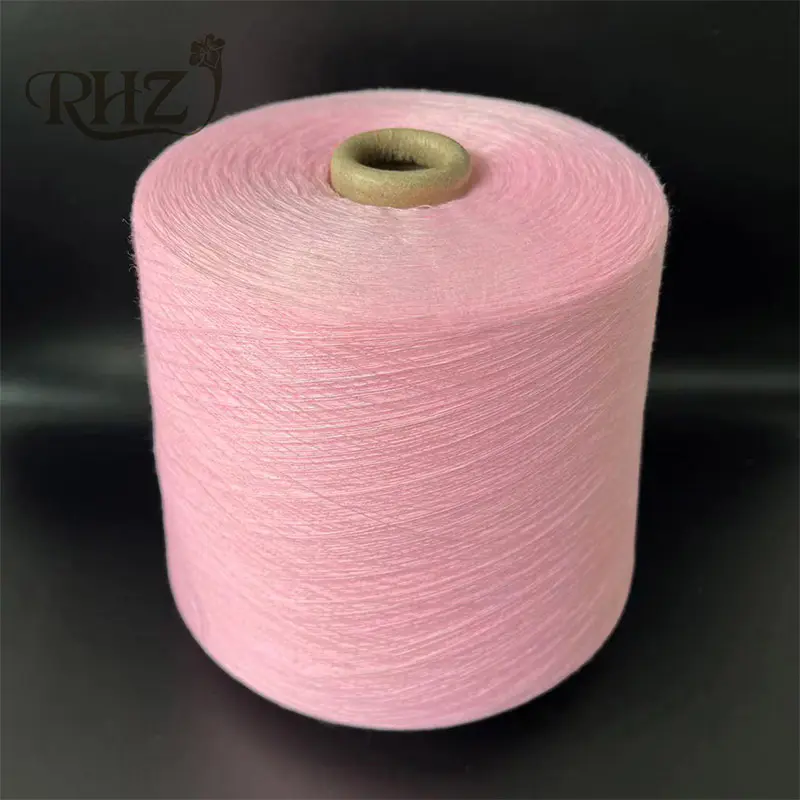
Polyester yarn is one of the most widely used yarn types in both industrial and consumer textile production, and for good reason. While it may not win on raw tensile strength compared to nylon, its combination of consistent performance across diverse conditions makes it the more versatile and cost-effective choice for a broad range of applications.
Knitting and Crocheting Yarn
For hand knitters and crocheters, polyester yarn offers excellent durability and color retention. It resists fading from washing and light exposure far better than nylon, which means finished projects — blankets, garments, home décor items — maintain their appearance through repeated use. Polyester yarn is also colorfast and holds dye exceptionally well, producing vibrant, long-lasting results.
Industrial and Sewing Thread
Polyester yarn is the backbone of industrial sewing thread. Its low moisture absorption means it won't swell and distort seams after washing, which is critical for consistent garment construction. Its heat resistance also allows polyester thread to run through high-speed industrial sewing machines without melting or breaking under friction.
Outdoor and Technical Textiles
In outdoor textile applications — tents, tarps, sail fabric, outdoor upholstery — polyester yarn's UV stability and moisture resistance give it a long service life in harsh environmental conditions. Nylon would degrade more rapidly under the same sun exposure, making polyester the industry standard for outdoor technical fabrics.
When to Choose Nylon Over Polyester
Despite polyester's many practical advantages, there are specific situations where nylon's superior tensile and abrasion strength make it the right choice:
- High-load applications: Ropes, straps, safety harnesses, and cargo nets that must bear significant weight benefit from nylon's higher tensile strength and elasticity.
- Heavy-wear footwear: Nylon is used in boot reinforcements, insoles, and sock blends where abrasion resistance at contact points is critical.
- Mechanical parts and gears: Nylon's toughness and impact resistance make it ideal for plastic mechanical components.
- Hosiery and sheer fabrics: Nylon's fine fiber diameter and translucency make it the material of choice for stockings and fine hosiery where polyester cannot match the feel or appearance.
The Case for Blending Nylon and Polyester
Many high-performance yarns and fabrics combine both nylon and polyester to capture the strengths of each fiber. A common example is sock yarn, where a small percentage of nylon — typically 15 to 25 percent — is blended into a polyester or wool base to dramatically increase abrasion resistance at the heel and toe. The polyester component provides color vibrancy, UV stability, and moisture management, while the nylon adds the toughness needed to survive daily wear.
In sportswear and activewear fabrics, nylon-polyester blends offer the stretch and recovery of nylon combined with the moisture-wicking and color retention properties of polyester. These blends have become the industry standard for performance leggings, athletic shorts, and compression garments precisely because neither fiber alone offers the complete performance profile that active use demands.
Final Verdict: Which Is Stronger?
Nylon is stronger than polyester in terms of raw tensile strength and abrasion resistance under dry conditions. However, polyester is stronger than nylon in wet conditions, UV environments, and applications requiring long-term resistance to heat and environmental degradation. Neither material is universally superior — the stronger choice depends entirely on what kind of strength matters most for your application.
For polyester yarn specifically, its combination of UV resistance, moisture management, color retention, and cost-efficiency make it the stronger practical choice for the vast majority of textile applications — from knitting and weaving to outdoor fabrics and industrial thread. When raw mechanical toughness or abrasion resistance is the priority, nylon earns its place. When all-around durability across real-world conditions is the goal, polyester delivers consistent, reliable performance that is difficult to beat.
