

 English
 Español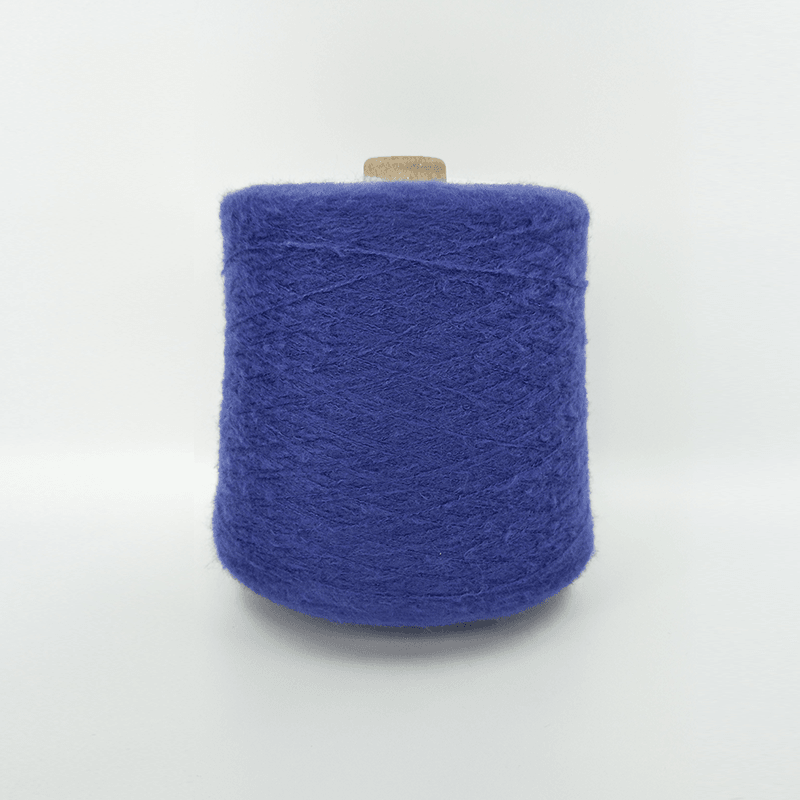
.jpg?imageView2/2/w/800/h/800/format/webp/q/75 "Viscose Core Spun Yarn")

 Click to view
“The company adheres to the business philosophy of 'You Win, I Win' ”
Content
- 1 Physical and Mechanical Characteristics
- 2 Thermal Behaviour: Melting Point, Heat Setting, and Ironing Limits
- 3 Moisture Management: Low Regain and Its Production Consequences
- 4 Chemical Resistance and Dyeing Behaviour
- 5 Pilling Resistance and Ways to Control It
- 6 Recycled Content and Sustainability Considerations
- 7 What to Look for When Buying Polyester Yarn
A yarn spec sheet may list tenacity, elongation, and shrinkage, but those figures do not always explain why a polyester fabric runs well on one knitting machine and jams on another. The missing information usually sits in less-publicised fibre characteristics such as moisture regain, heat behaviour, and the fibre's response to abrasion.
The characteristics of polyester fibre form a system, not a single set of values. Standard polyethylene terephthalate (PET) fibre offers high strength, low moisture absorption, and good dimensional stability. The same properties explain why pure polyester can feel warm, build static, and pill on the surface. For a yarn buyer, the task is not to classify polyester as good or bad, but to match the fibre form, yarn structure, and performance grade to a specific end use.
Physical and Mechanical Characteristics
The most quoted polyester properties are tensile strength and dimensional stability. They determine how the yarn behaves in warping, knitting, weaving, and repeated washing.
Tenacity and Breaking Strength
PET staple fibres typically show a tenacity of 30–50 cN/dtex in standard conditions, with most of that strength retained when wet. Cotton loses more strength wet, and viscose loses a large part. As a result, polyester yarns tolerate high machine tensions and frequent laundering without unexpected breakage. This is why outdoor panels, workwear, and upholstery use polyester yarns as a standard option.
Elastic Recovery, Dimensional Stability, and Abrasion Resistance
At small extensions, polyester recovers almost completely, which gives fabric good crease recovery. Heat setting controls shrinkage so that the finished width and length stay within a narrow tolerance. In abrasion, polyester ranks just below nylon among common fibres. For a weaving mill, this means fewer stops and more predictable finished fabric; for a garment buyer, it means collars, cuffs, and knees hold their shape.
| Fibre | Tenacity (cN/dtex) | Moisture regain at 65% RH | Abrasion resistance | Pilling tendency |
|---|---|---|---|---|
| Polyester staple | 30–50 | 0.4% | Excellent | High unless modified |
| Cotton | 20–30 | 7–8% | Moderate | Low |
| Wool | 12–20 | 15–16% | Low to moderate | Moderate |
| Nylon | 40–55 | 4–4.5% | Very high | Moderate to high |
Notice the pilling column. Standard staple polyester tends to pill because the strong fibres resist breakage, so the ends stay attached and roll into balls. Anti-pilling grades solve this by lowering the force needed for the pill to detach. That detail matters more in knitwear than in tightly woven fabrics, and it is one of the first things to check on a material data sheet.
Thermal Behaviour: Melting Point, Heat Setting, and Ironing Limits
Polyester does not ignite the way cotton does; it melts and can drip. Standard PET has a melting point of roughly 255°C, with a glass transition around 70–80°C. This makes finishing and ironing temperature-sensitive. A normal household iron on the cotton setting can distort a polyester fabric. In industrial production, however, the same heat sensitivity is an advantage. Heat setting locks in shape, pleats, and dimensions, which is why polyester-blend suits hold a crease so well. For knitwear, a high-bulky polyester yarn can be heat-set so that the garment keeps its silhouette through multiple washes.
Moisture Management: Low Regain and Its Production Consequences
At 65% relative humidity, polyester fibre has a moisture regain of only about 0.4%, compared with 7–8% for cotton and 15–16% for wool. In practical terms, polyester dries quickly and resists water-borne stains. The low adsorption also keeps outdoor gear lightweight when wet. But the same property creates two production concerns: static electricity during spinning and weaving, and a non-breathable feel in warm weather. Modifications such as trilobal cross-sections, hollow fibres, or hydrophilic finishing improve moisture transport. When you source yarn, ask about the available cross-sections and finishes rather than assuming all polyester behaves the same.
Chemical Resistance and Dyeing Behaviour
Polyester resists most mineral acids at low temperatures and is stable in weak alkalis, which is why it stands up to many industrial cleaning agents. Strong hot alkali, however, will hydrolyse the fibre surface, a reaction that finishing mills sometimes control carefully to create a peach-skin texture.
Dyeing polyester is more demanding than dyeing cotton or wool. Disperse dyes need high temperature or carriers to penetrate the fibre; the typical route uses 130°C in a pressurised vessel. Cationic-dyeable polyester is a modified grade that dyes at normal pressure and expands the colour range. This is not just a technical detail. The dyeing route affects cost, lead time, and colour consistency, so a buyer should state which grade is being quoted. If you are comparing spun yarn with textured filament, the difference between spun and textured polyester yarn helps explain how twist and texture change the dyeing and handling behaviour.
Pilling Resistance and Ways to Control It
Pilling is the most visible weakness of polyester staple yarn. Short fibre ends work their way to the surface, and because the fibres are strong, the pills stay attached instead of falling away. The result is a faded, roughened appearance on cuffs and underarms. Anti-pilling polyester grades are manufactured with a slightly lower molecular weight, so pills detach more easily. Blending with cotton, viscose, or wool also reduces pilling and improves comfort, though it lowers tenacity and changes colour matching. For any knitwear programme, specify the pilling grade and the expected test method. A fabric that looks clean in a showroom sample may fail after twenty washes if the grade is wrong.
Recycled Content and Sustainability Considerations
Recycled polyester, usually from PET bottles or industrial waste, now has a stable place in yarn catalogues. Its mechanical properties are close to virgin PET, so substituting rPET does not automatically require a change in knitting or weaving parameters. Dye consistency and lot-to-lot variation, however, still need verification. The main criticism of polyester in general is microplastic shedding during laundering. That has pushed some buyers toward cellulose blends, but recycled polyester remains a practical choice for outdoor and workwear lines where strength and rapid drying matter. If sustainability is part of your sourcing brief, ask for the recycled content percentage and any supporting certification, and request shade bands from the actual production lot.
What to Look for When Buying Polyester Yarn
A good enquiry for polyester yarn should contain more than a fibre name and a count. Compare these points on the spec sheet before deciding:
- Moisture regain and fibre finish — low regain is normal, but the finish affects static and machine running.
- Tenacity and elongation balance — weaving prefers higher tenacity; knitting may tolerate higher elongation.
- Boiling water shrinkage or heat setting — important for washed garments and pleated fabrics.
- Dyeing route — regular disperse at high temperature or cationic-dyeable grade.
- Pilling grade — critical for carded knitwear and brushed surfaces.
For knitted garments, our knitting-yarn range includes yarns developed with pilling behaviour and machine-running performance in mind. For woven panels that must hold dimensions, the woven panel yarns in our catalogue are specified with lower shrinkage and a stable twist.
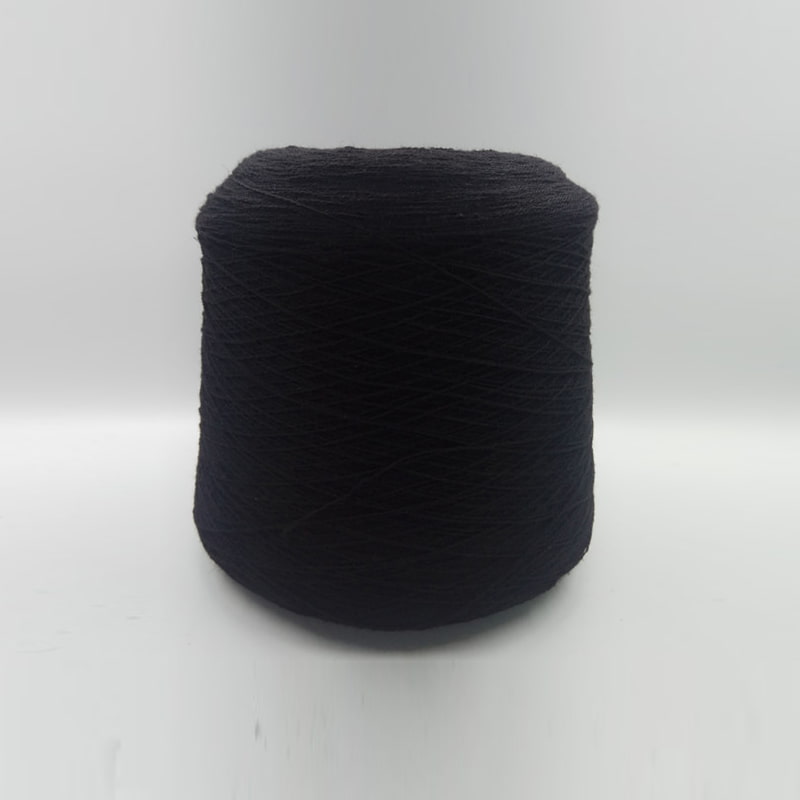
In our own spinning operation, we see the same polymer produce very different yarns depending on the fibre form and the machine. A standard PET staple can spin into a high-bulky polyester yarn with a soft, wool-like hand; a smooth, dense yarn for lining or taffeta; or a fine count for lightweight knitwear.
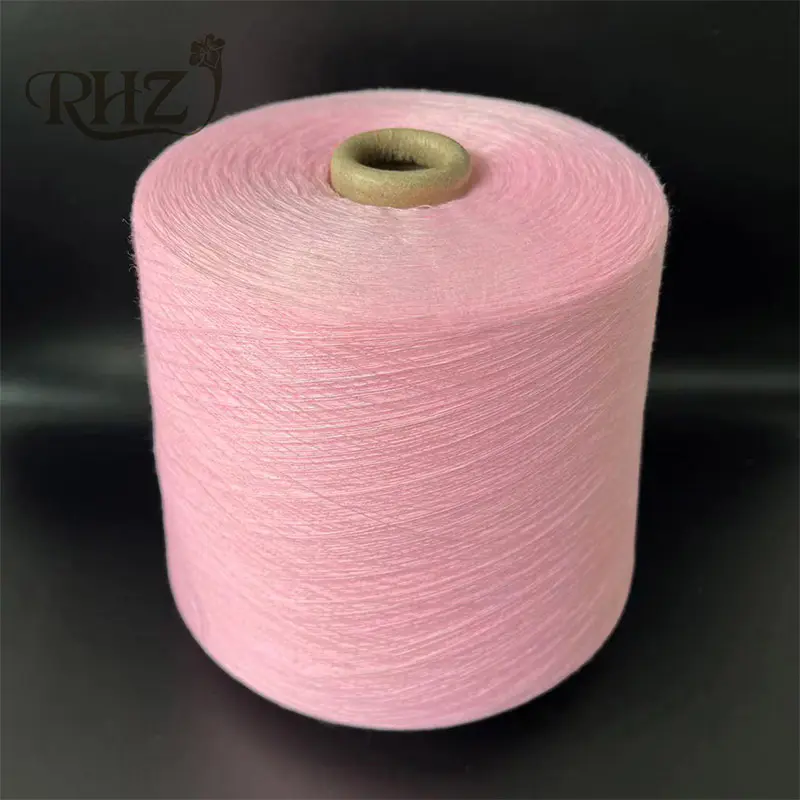 Polyester Spun Knitting Yarn Manufacturers, FactorySuzhou RHZ Textile Technology is China Wholesale Polyester Spun Yarn Manufacturers and Polyester Knitting Yarn Factory, Wholesale Polyest...View Product →
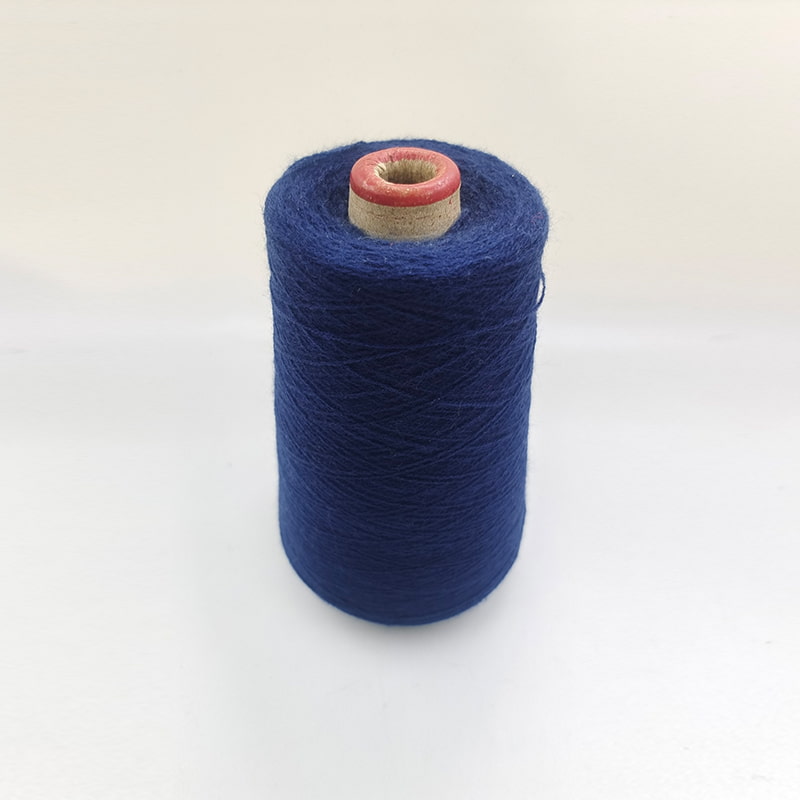
When the final fabric needs stretch and recovery, a polyester core-spun yarn is worth considering: a continuous polyester filament runs through the core, while an outer sheath of cotton, viscose, or other staple fibre gives the surface feel. This construction keeps the strength of filament polyester without the slippery, plastic hand.
.jpg?imageView2/2/w/800/h/800/format/webp/q/75) Custom Polyester Core Spun Yarn Suppliers,FactorySuzhou RHZ Textile Technology Co., Ltd. is China Custom Polyester Core Spun Yarn Suppliers,Factory,Polyester Core Spun Yarn is made by P...View Product →
Custom Polyester Core Spun Yarn Suppliers,FactorySuzhou RHZ Textile Technology Co., Ltd. is China Custom Polyester Core Spun Yarn Suppliers,Factory,Polyester Core Spun Yarn is made by P...View Product →
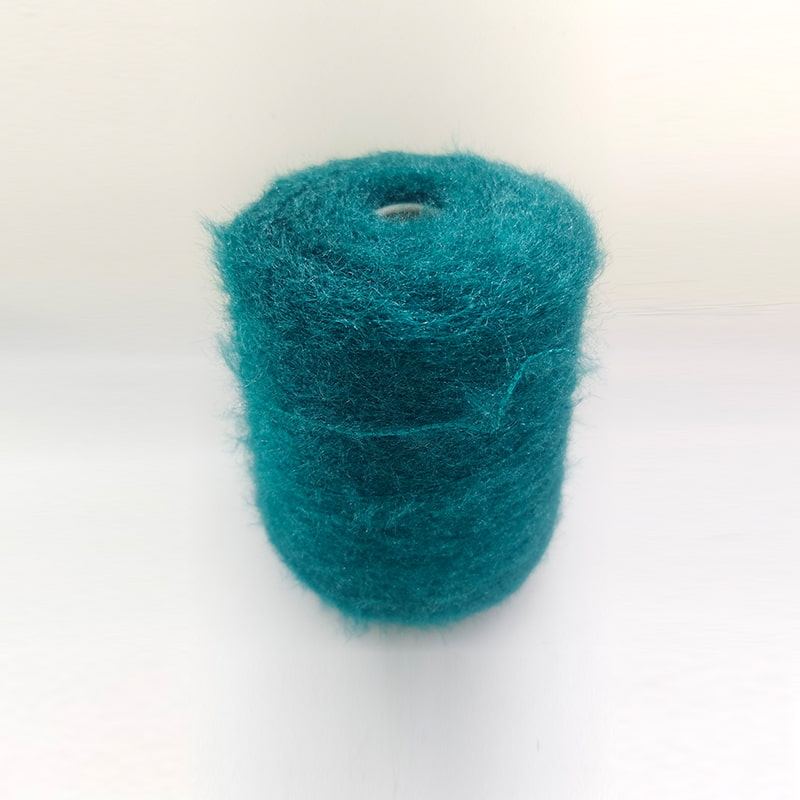
For fleece and nightwear, a polyester brushed yarn starts as regular polyester yarn and then goes through a mechanical brushing process. The brushing lifts surface fibres, creating a soft, warm texture, but it also increases the surface area available for pilling. So the brushing parameters and the pilling grade of the base yarn have to be checked together.
.jpg?imageView2/2/w/800/h/800/format/webp/q/75) Polyester Brushed Yarn Manufacturers, FactorySuzhou RHZ Textile Technology Co Ltd is China Wholesale Polyester Brushed Yarn Manufacturers and Polyester Brushed Yarn Factory, Wholesal...View Product →
Polyester Brushed Yarn Manufacturers, FactorySuzhou RHZ Textile Technology Co Ltd is China Wholesale Polyester Brushed Yarn Manufacturers and Polyester Brushed Yarn Factory, Wholesal...View Product →
The rule is simple: do not buy "polyester yarn" as a generic product. Specify the fibre form (staple, filament, textured), the end use (knitting, weaving, brushing), and the performance grade (anti-pilling, cationic-dyeable, recycled). Then the characteristics of polyester fibre become an advantage instead of a compromise.
