

 English
 Español
.jpg?imageView2/2/w/800/h/800/format/webp/q/75 "Viscose Core Spun Yarn")

 Click to view
“The company adheres to the business philosophy of 'You Win, I Win' ”
Content
- 1 Polyester Spun Yarn vs Cotton Knitting Yarn
- 2 Polyester Spun Yarn vs Wool Knitting Yarn
- 3 Polyester Spun Yarn vs Acrylic Knitting Yarn
- 4 Comparison with Blended Knitting Yarns
- 5 Differences in Knitting Performance and Fabric Behavior
- 6 Cost Efficiency and Industrial Application Differences
- 7 Environmental and Sustainability Considerations
- 8 Choosing the Right Knitting Yarn for Your Application
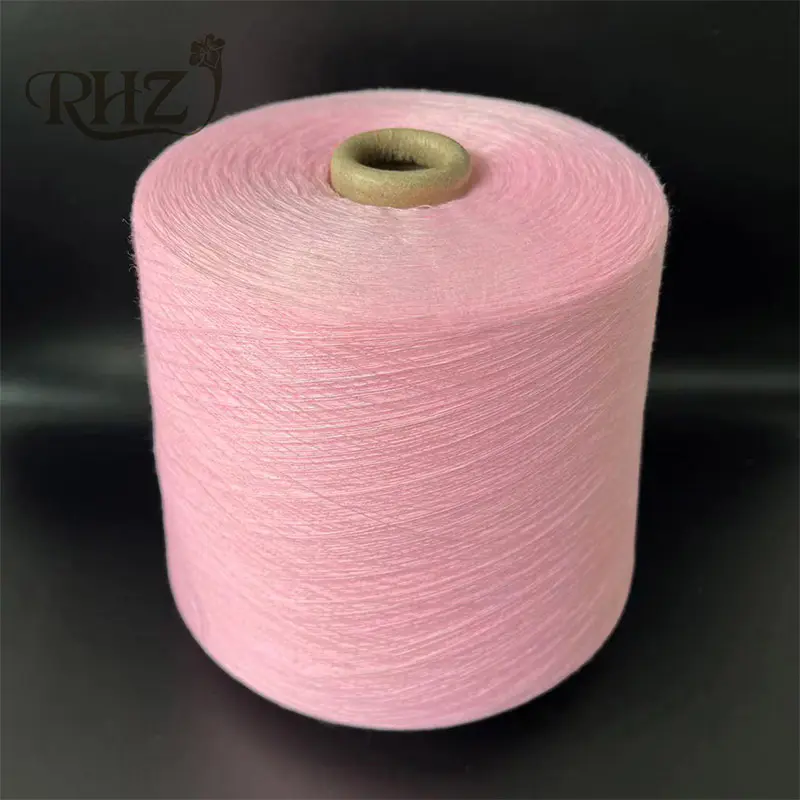
Polyester spun knitting yarn is produced by spinning short polyester staple fibers into a continuous yarn structure. Unlike filament yarns, which are made from long, continuous fibers, spun yarns more closely resemble natural fibers in appearance and hand feel. This makes polyester spun yarn a popular choice for knitting applications where softness, uniformity, and durability are required.
In knitting, polyester spun yarn is widely used for garments, home textiles, and technical fabrics due to its stable quality, resistance to deformation, and ease of processing. To fully understand its value, it is essential to compare it with other commonly used knitting yarns such as cotton, wool, acrylic, and blended yarns.
Polyester Spun Yarn vs Cotton Knitting Yarn
Cotton yarn is one of the most traditional materials in knitting, valued for its natural origin and breathability. However, when compared directly, polyester spun knitting yarn offers several distinct differences in performance and maintenance.
Polyester spun yarn has significantly higher strength and abrasion resistance than cotton yarn. This means knitted fabrics made from polyester are less likely to wear out, tear, or lose shape after repeated washing. Cotton yarn, while soft and breathable, tends to weaken when wet and may shrink or wrinkle more easily.
In terms of moisture behavior, cotton absorbs water readily, which can make garments feel heavy during use. Polyester spun yarn, by contrast, has low moisture absorption and dries quickly, making it more suitable for activewear and performance knitting.
Polyester Spun Yarn vs Wool Knitting Yarn
Wool knitting yarn is known for its excellent insulation, elasticity, and natural temperature regulation. When comparing wool to polyester spun knitting yarn, the differences are especially noticeable in comfort, care, and durability.
Wool fibers naturally trap air, providing warmth even in cold conditions. Polyester spun yarn does not offer the same level of natural insulation, but it compensates with consistent performance, lighter weight, and resistance to moths and mildew. This makes polyester yarn more practical for everyday garments that require frequent washing.
Care requirements are another key distinction. Wool yarn often requires gentle washing or dry cleaning to prevent felting and shrinkage. Polyester spun knitting yarn is machine washable, maintains dimensional stability, and retains color well over time, reducing maintenance costs for manufacturers and end users.
Polyester Spun Yarn vs Acrylic Knitting Yarn
Acrylic yarn is a popular synthetic alternative to wool, especially in cost-sensitive knitting projects. While both acrylic and polyester spun yarn are man-made fibers, their performance characteristics differ in several practical ways.
Polyester spun knitting yarn generally offers better tensile strength and abrasion resistance than acrylic yarn. Acrylic fibers are more prone to pilling, especially in areas of high friction, whereas polyester spun yarn maintains a smoother surface for a longer period of use.
Heat resistance is another factor to consider. Acrylic yarn can be sensitive to high temperatures, potentially melting or deforming during ironing or tumble drying. Polyester spun yarn has higher thermal stability, allowing for more flexible finishing and care processes.
Comparison with Blended Knitting Yarns
Blended knitting yarns combine two or more fiber types, such as polyester-cotton or polyester-wool, to balance performance and comfort. Polyester spun yarn often serves as the backbone of these blends due to its strength and cost efficiency.
Compared to blends, 100% polyester spun knitting yarn offers greater consistency in quality and performance. Blends may deliver improved softness or breathability, but they can also introduce variability in shrinkage, dye uptake, and durability depending on fiber ratios.
| Yarn Type | Durability | Moisture Behavior | Care Requirement |
| Polyester Spun | Very High | Low absorption, quick dry | Easy, machine washable |
| Cotton | Medium | High absorption | Moderate, may shrink |
| Wool | Medium | Moderate, temperature regulating | High, delicate care |
| Acrylic | Medium | Low absorption | Easy, heat sensitive |
Differences in Knitting Performance and Fabric Behavior
From a knitting perspective, polyester spun yarn delivers excellent stitch definition and uniform loop formation. Its consistent fiber length and strength reduce yarn breakage during high-speed knitting, making it suitable for industrial production.
Compared with natural yarns, polyester spun knitting yarn produces fabrics with better dimensional stability. Finished garments are less likely to stretch out or lose shape over time, which is particularly important for ribbed or structured knit designs.
Cost Efficiency and Industrial Application Differences
Cost is a decisive factor in yarn selection. Polyester spun knitting yarn offers a stable supply chain and predictable pricing, making it attractive for large-scale manufacturing. Natural yarns such as cotton and wool are more susceptible to price fluctuations caused by climate, farming conditions, and market demand.
In industrial knitting, polyester spun yarn supports high productivity due to its low defect rate and compatibility with automated equipment. This efficiency advantage often outweighs the slightly lower natural comfort compared to cotton or wool.
Environmental and Sustainability Considerations
Sustainability is increasingly influencing yarn selection. Traditional polyester is derived from petrochemical sources, which raises environmental concerns. However, recycled polyester spun knitting yarn made from post-consumer plastic bottles is becoming more widely available.
When compared with other knitting yarns, recycled polyester offers a practical balance between performance and environmental responsibility. While natural fibers are biodegradable, their production often requires significant water and land resources, making the sustainability comparison more complex.
Choosing the Right Knitting Yarn for Your Application
The differences between polyester spun knitting yarn and other knitting yarns highlight that no single material is ideal for every project. Polyester spun yarn excels in durability, ease of care, and production efficiency, making it well-suited for everyday garments, sportswear, and commercial textiles.
Cotton and wool remain strong choices for projects that prioritize natural comfort and breathability, while acrylic and blends offer cost or aesthetic advantages. Understanding these differences allows knitters, designers, and manufacturers to select the most appropriate yarn based on functional requirements and target markets.
