

 English
 Español
.jpg?imageView2/2/w/800/h/800/format/webp/q/75 "Viscose Core Spun Yarn")

 Click to view
“The company adheres to the business philosophy of 'You Win, I Win' ”
Content
- 1 What Is Vortex Core Spun Yarn and How Is It Made?
- 2 Key Structural Differences Between Vortex and Ring Spun Core Yarn
- 3 Performance Advantages That Set Vortex Core Spun Yarn Apart
- 4 Common Fiber Combinations Used in Vortex Core Spun Yarn
- 5 Industries and Applications Where Vortex Core Spun Yarn Excels
- 6 Dyeing and Finishing Considerations for Vortex Core Spun Yarn
- 7 Evaluating Vortex Core Spun Yarn Quality: What Buyers Should Check
What Is Vortex Core Spun Yarn and How Is It Made?
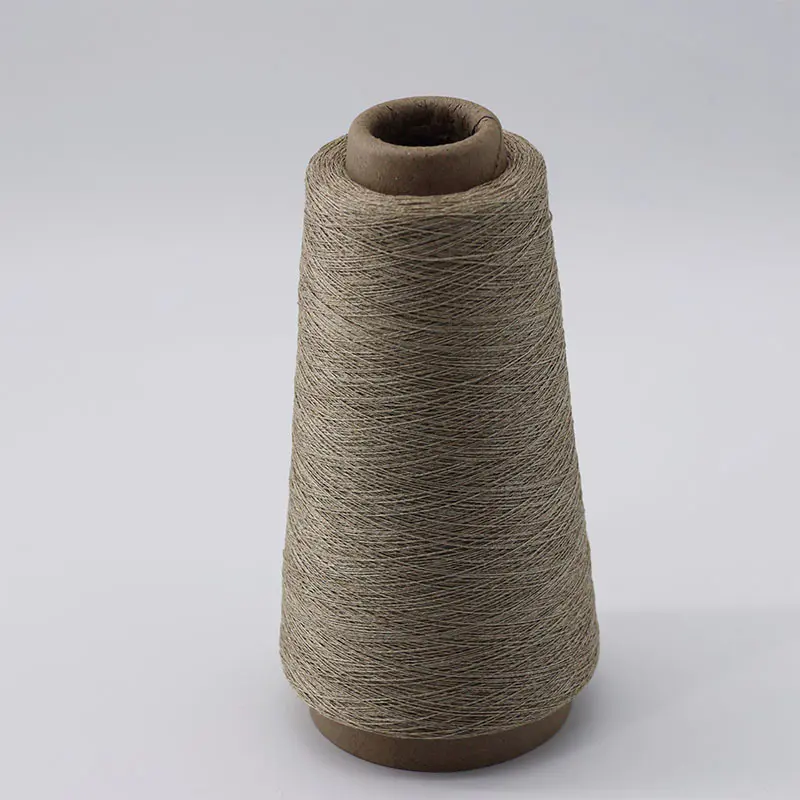
Vortex core spun yarn is a specialized type of yarn produced using air-jet vortex spinning technology, where a drafted fiber bundle is wrapped around a continuous filament core using a high-speed rotating air vortex. Unlike conventional ring spinning or open-end rotor spinning, the vortex spinning process uses compressed air to twist fibers around the core without the need for a spindle or rotor. This results in a yarn structure where the core — typically a polyester or other filament — provides tensile strength, while the outer sheath fibers contribute softness, absorbency, and surface aesthetics.
The production process begins with a drafted sliver of staple fibers (commonly cotton, viscose, or a blend) being fed into the vortex spinning unit. As the fibers enter the nozzle block, the air vortex separates them into leading fibers — which form the core-wrapping structure — and trailing fibers that wind tightly around the outside. The result is a compact, well-integrated yarn with a distinctive helical fiber arrangement on its surface. This technology was pioneered by Murata Machinery (now Muratec) and is commercially known under machine names like MVS (Murata Vortex Spinner), allowing very high production speeds compared to ring spinning.
Key Structural Differences Between Vortex and Ring Spun Core Yarn
Understanding how vortex core spun yarn differs structurally from ring spun core yarn helps explain many of its functional advantages. In ring spinning, twist is inserted mechanically via a traveler moving around a ring, and the resulting yarn has a more parallel fiber arrangement. Vortex spinning, by contrast, creates a more complex surface structure where outer fibers are bound at acute angles, contributing to improved pilling resistance and abrasion durability.
The table below highlights the main structural and performance differences between these two yarn types:
| Property | Vortex Core Spun Yarn | Ring Spun Core Yarn |
| Spinning Method | Air vortex (no spindle) | Mechanical twist via ring/traveler |
| Production Speed | Very high (300–500 m/min) | Moderate (15–25 m/min) |
| Pilling Resistance | Excellent | Moderate |
| Moisture Absorption | Good (with natural fiber sheath) | Good |
| Hairiness | Low | Higher |
| Tensile Strength | High (core reinforced) | High |
| Surface Evenness | Very uniform | Good but less consistent |
Performance Advantages That Set Vortex Core Spun Yarn Apart
One of the most commercially significant advantages of vortex core spun yarn is its exceptionally low hairiness. In yarn science, hairiness refers to the number of fiber ends protruding from the yarn surface, which contributes to pilling in finished fabrics. Because the vortex spinning mechanism binds most fiber ends tightly into the yarn body, the resulting fabric surfaces are smoother and maintain their appearance far longer through repeated washing and mechanical abrasion.
In addition to pilling resistance, vortex core spun yarn demonstrates superior dimensional stability. The polyester filament core resists elongation under stress, meaning garments made from this yarn are less prone to stretching out of shape over time. This is a critical property for workwear, activewear, and performance fabrics where shape retention is essential across hundreds of wash cycles. The core also acts as a load-bearing element that reduces the risk of seam failure in tightly fitted garments.
Moisture management is another key strength. When vortex core spun yarn uses cotton or viscose as the sheath fiber, the outer surface retains excellent hydrophilicity — absorbing and wicking moisture away from the skin — while the polyester core provides the structural backbone that prevents fabric sagging when wet. This dual-function architecture makes vortex core spun yarn one of the best options for sportswear, medical textiles, and performance innerwear.
Common Fiber Combinations Used in Vortex Core Spun Yarn
The versatility of vortex core spun yarn lies partly in the wide range of fiber combinations that can be used in its construction. Textile manufacturers select fiber pairings based on the end-use requirements of the fabric, balancing factors like softness, strength, stretch recovery, and cost.
- Cotton sheath / Polyester core: The most widely used combination. The cotton outer layer provides breathability and a natural hand feel, while the polyester core adds tensile strength and dimensional stability. Ideal for T-shirts, casual wear, and uniforms.
- Viscose sheath / Polyester core: Viscose gives a silky, lustrous surface while the core maintains shape. Frequently used in dress shirts, blouses, and lightweight fashion fabrics.
- Cotton/Modal blend sheath / Spandex core: Modal adds softness and drape, while the spandex core provides stretch and elastic recovery. Common in athleisure, yoga wear, and form-fitting garments.
- Recycled polyester sheath / Virgin polyester core: An eco-conscious combination gaining traction in sustainable fashion lines. Maintains performance while reducing environmental impact.
- Tencel/Lyocell sheath / Polyester core: Tencel offers exceptional softness and moisture management with a reduced environmental footprint. The polyester core compensates for Tencel's lower abrasion resistance, creating a balanced, sustainable yarn.
Industries and Applications Where Vortex Core Spun Yarn Excels
Vortex core spun yarn has found its way into a diverse range of industries precisely because its unique combination of properties addresses multiple performance demands simultaneously. It is no longer a niche product — it is increasingly the yarn of choice for manufacturers who need quality, speed, and consistency.
Apparel and Fashion
In the apparel sector, vortex core spun yarn is widely used for T-shirts, polo shirts, denim, and knitwear. Its low-pilling surface and consistent diameter make it particularly valuable for single-jersey fabrics that need to look sharp after repeated laundering. Fashion brands appreciate that vortex yarn holds dye uniformly, producing vibrant, even coloration without the blotchiness sometimes seen with less consistent yarn structures.
Medical and Hygiene Textiles
Medical textile applications benefit from vortex core spun yarn's cleanliness — its low-hairiness surface sheds fewer fibers, which is critical in clinical environments where particulate contamination must be minimized. Surgical gowns, hospital bed linens, and patient apparel made with vortex yarn undergo rigorous industrial laundering cycles and must maintain their integrity and appearance. The core filament also allows these fabrics to withstand sterilization processes without structural degradation.
Workwear and Protective Clothing
For workwear applications, dimensional stability and durability are non-negotiable. Vortex core spun yarn with a polyester core delivers the tear resistance and shape retention required in demanding environments. When combined with flame-retardant or high-visibility sheath fibers, it enables the production of protective garments that meet strict safety standards without sacrificing comfort or wearability over long shifts.
Home Textiles
Towels, bed sheets, and upholstery fabrics produced with vortex core spun yarn benefit from the yarn's uniform structure and resistance to surface degradation. Toweling fabrics made from cotton-sheath vortex yarns maintain their softness and absorbency longer than those made from conventional open-end or ring spun yarns. For upholstery, the combination of a tough filament core and a natural fiber surface creates a fabric that is both visually appealing and functionally robust.
Dyeing and Finishing Considerations for Vortex Core Spun Yarn
Processing vortex core spun yarn through dyeing and finishing requires an understanding of its composite structure. Since the core and sheath are typically made of different fiber types, they may require different dye classes. For a cotton-sheath/polyester-core yarn, for example, a two-bath dyeing process using reactive dyes for the cotton component and disperse dyes for the polyester core ensures complete and even coloration throughout the yarn cross-section.
The low hairiness of vortex yarn also produces cleaner dye uptake on the fabric surface, which translates to brighter color vibrancy and reduced risk of unlevel dyeing. Finishing treatments such as softening, anti-pilling, and easy-care resin application adhere well to the uniform surface, making vortex core spun fabrics highly compatible with functional finishing processes used in performance and workwear textiles.
Evaluating Vortex Core Spun Yarn Quality: What Buyers Should Check
For buyers and product developers sourcing vortex core spun yarn, knowing which quality parameters to assess is essential for ensuring the final fabric meets performance expectations. Not all vortex yarns are created equal, and supplier consistency matters greatly in high-volume production.
- Yarn count and count variation (CV%): A low CV% indicates consistent yarn diameter throughout the package, which is critical for even fabric appearance and predictable fabric weight.
- Tenacity and elongation: Measured in cN/tex, these values confirm the yarn's ability to withstand tension during weaving or knitting without frequent breakage.
- Hairiness index (H-value): Tested on instruments like the Uster Tester, the H-value should be notably lower for vortex yarns compared to ring spun equivalents of the same count. Request this data from suppliers as a standard quality benchmark.
- Core exposure or migration: Inspect yarn samples to confirm the filament core is fully encapsulated by the sheath fibers. Core migration — where the filament peeks through the surface — can cause uneven dyeing and affect fabric hand feel.
- Pilling resistance of finished fabric: Request fabric swatches knitted or woven from the yarn and evaluate them against standard pilling tests (ISO 12945-2 or ASTM D3512) after multiple wash cycles to confirm real-world performance.
Vortex core spun yarn represents a meaningful evolution in yarn engineering — combining the structural intelligence of core spinning with the speed and consistency of air-jet vortex technology. For textile manufacturers and brands seeking yarns that deliver durability, surface quality, and processing efficiency in one package, vortex core spun yarn continues to prove itself as one of the most practical and high-performing options available in the modern spinning landscape.
